~post by Bruce
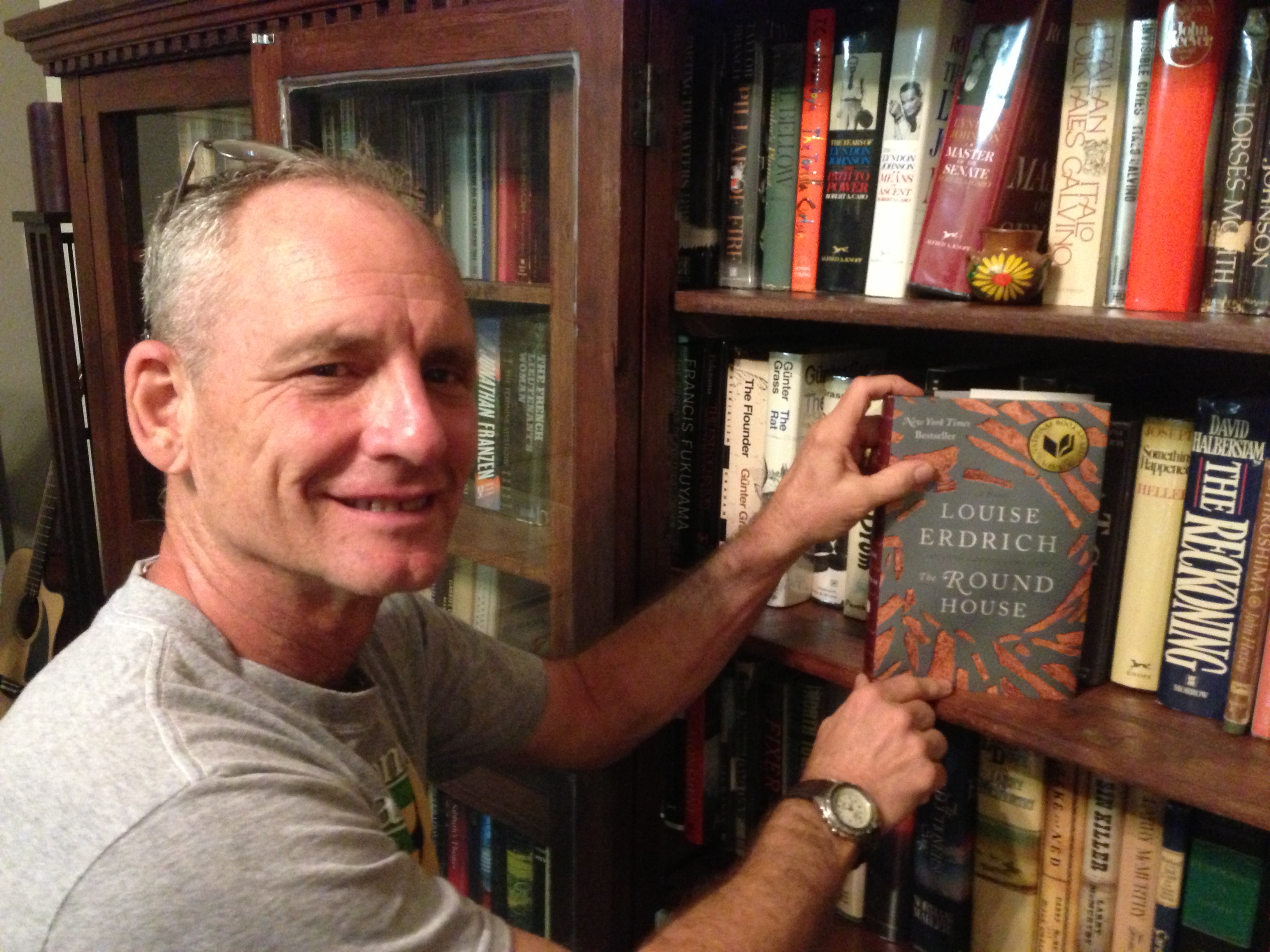
I was angry when I turned the last page of Louise Erdich’s The Round House. Not at her. But at the injustice that burned at the heart of her story. We learn that if a Native woman is attacked or abused by a non-Native person on a reservation, the tribe has no jurisdiction to prosecute, even if the abuser is married to a Native woman. I’m pretty sure that Erdich is angry, too, and along with wanting to tell a good story, she wanted to make her readers uncomfortable enough with this loophole in the law to move them to do something.
The characters in Roundhouse are plenty angry and they try their best to do something about it. Joe, the teenage protagonist, takes things into his own hands. The father, a Native judge, tries to work through the law. And while the story is resolved, neither character can do what perforce needs to be done to close this notorious loophole that has allowed so much abuse and so many attacks on Native women. Erdich reports in the Afterword that 1 in 3 Native women will be raped in their lifetime, and 86% will be raped by non-Natives.
I finished the book on March 6th, then put the book on the shelf and went to bed. The very next day, March 7th, I awoke and looked up in the sky — and saw a bird, no, it was a plane, no, it was…. Obama! The day after I finished The Roundhouse he swooped down, pen in hand, to sign a law that gave tribes the power to prosecute non-Natives who abuse women on reservations. Miraculously, the omnipresent Obama entered into my reading experience and in a sense changed the ending of the book.

So if you read The Roundhouse now, it has, maybe not a happier ending, but a much more satisfying, justice-wins-out-in-the-end feel to it.
The story itself is basically a bildungsroman that transpires under a very dark cloud. A young boy’s family has suffered a terrible assault, which launches him on a quest to solve the crime and at the same time to learn about life and himself. His search for identity is not an easy one, given the crazy mix of cultures and religion that exists on the contemporary reservation.
And it is through this world he races about with his posse of friends on bicycles looking for clues and following antic leads. At times, the book comes off as a Ojibwe Hardy Boys story. But eventually the story’s twists and turns take you to an even darker place than where the story began, a place where right and wrong have been erased by unjust law.

Erdich takes her time resolving the crime, mirroring the family slowly trying to come to grips with what has happened to them. Meanwhile, Erdich uses Joe’s restlessness to drive the narrative as he tries on religions, drugs, sex in his quest to make things right again. But the real mise en scene and strength of the story is the extended Native family and the history and connection that is offered to Joe in lieu of his parents who become more distant and helpless as they try to cope with their pain.
The saviors of this story are the strength of the extended family and Joe’s character – and, of course, the 43rd and 44th president, the deus ex machina.
_________________________________
Copies of The Round House are available on our shelves and via bookpeople.com.

 BookPeople
I recently read this book also and I was appalled that there was no sense of justice for the family. The legal system failed in this story. What is this bull about tribal law? The law is supposed to help and protect everyone.