~post by Marie
The Sci Fi/Fantasy genre is a genre that is actually two genres that is actually way more genres than that, like a dream inside a dream inside a dream. There are a lot of sub genres that fall broadly under Sci Fi or Fantasy, and there are quite a few books that make up each sub-genre, and more every year. In our Sci Friday posts, we’ll be taking a look at some of these sub-genres every so often, and paying tribute to these categories, these sub-genres, that have distinct attributes and styles.
To start it off, we’ll take a look at Steampunk. Perhaps you have heard of Steampunk. Perhaps you have heard of it, but you just didn’t know it. This particular sub-genre has taken the unique path of not only being part of the literary world, but it has finagled its way into the real world as well, and spans many outlets from movies, plays, art, clothing, accessories, and even some parties. Chances are, you’ve stumbled across it a time or two.
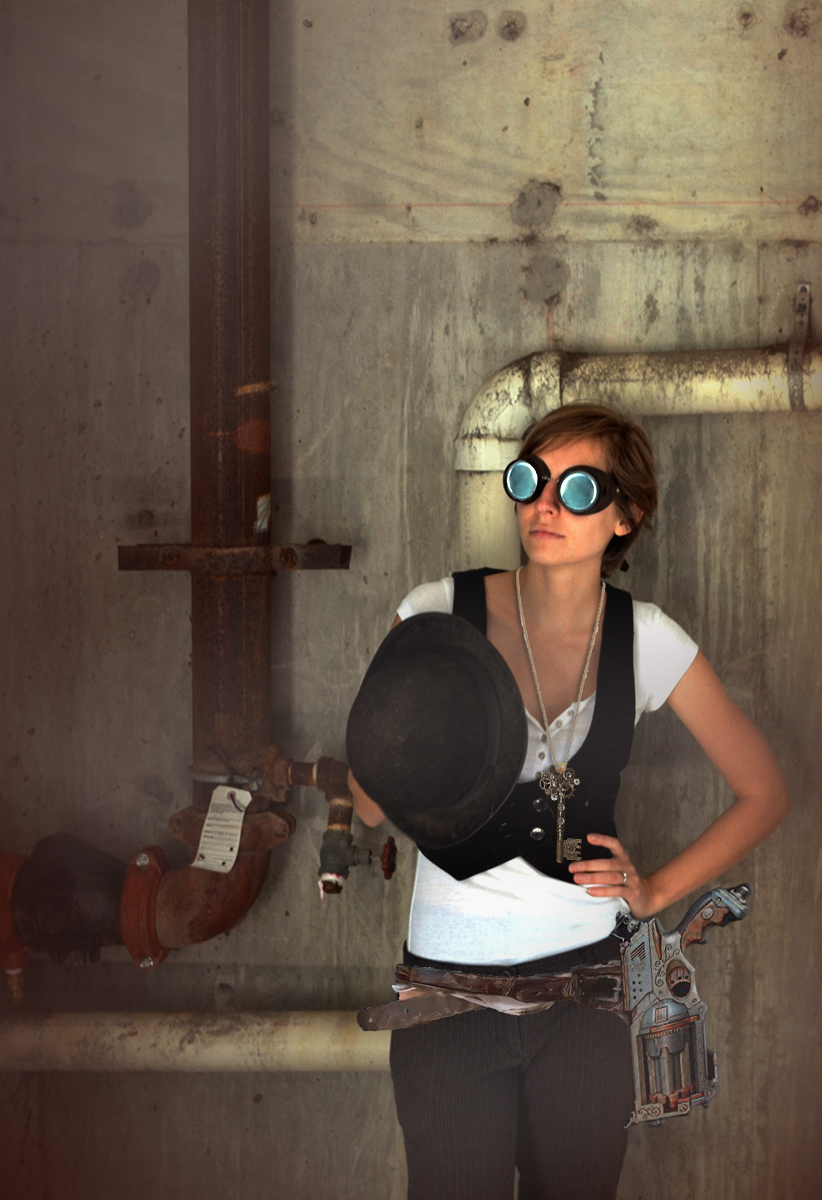
So what is Steampunk? There’s not a good, straight-forward answer. Even within the sub-genre of Steampunk, there are many permutations of what that might entail. There are sub-genres within sub-genres within a divided genre…this is getting pretty meta. We can say a few things in general about what makes a book, or anything else for that matter, Steampunk. Typically, there is a lot of steam and often some sort of discord, conflict, and/or an underdog. This may seem pretty obvious, but it’s not like it’s a bunch of unruly high school students running around in saunas or rainforests tagging tree trunks. Usually the setting of a steampunk book is roughly Victorian England, or inspired by it. Instead of electricity, things are powered by steam. People wear corsets, bowler hats, goggles, carry canes, and are often times mechanized in some way, having some sort of mechanical parts or there are automatons (sort of like robots but steam powered). Because everything is powered by steam, the worlds are often times very gritty or grungy, and there’s usually a lot of iron or copper being cast or burnished. There are things like “difference engines” and “steam-powered intelligence devices”. You will read a lot about cogs, sprockets, levers, pistons, and dirigibles. People may be referred to as “madame”, “guv’na”, “chap”, or “ol’ boy”. There are often cobbled streets.

This is not always the case, though! Some steampunk books take place in more modern times, and computers exist, but are powered by steam. Or sometimes they have elements of magic in them, or in conjunction with automatons and steam-powered rifles. There are some that take place in a parallel universe, or have intersecting universes through portals, and all the serious types wear a monocle and a waistcoat. But there is definitely something unmistakable about this sub-genre. Every so often there will be steam engine locomotives and steampunk cowboys.
The history of Steampunk is somewhat disputed, but it can generally be said that there are a few seminal and influential works that are widely agreed on to be important in development of Steampunk. In fact, Steampunk was an integral influence during an important time in the history of Sci Fi. In the 1860’s we had the likes of Jules Verne with his 20,000 Leagues Under the Sea, Journey to the Center of the Earth, and Around the World in Eighty Days; H.G. Wells in the late 1800’s with The Time Machine, and The Shape of Things to Come; Hugo Gernsback, (as in the Hugo Awards Hugo) with the Sci Fi magazine Amazing Stories during the first half of the 1900’s. They and many others all wrote stories that set many precedents for what has come to be known as Steampunk. Even earlier than that were folks like Charles Dickens, known for his grungy, steamy Victorian worlds, and Mary Shelley, known for Frankenstein, his monster being perhaps the first of many automatons and machine men. But it wasn’t really called Steampunk just yet.
In the early 70’s, Michael Moorcock began writing a series called A Nomad of the Time Streams, following the adventures of an Edwardian-era Captain in the British Army who is transported to an alternate version of late 20th Century Earth on the brink of the first world war. These were joined by K. W. Jeter’s book Infernal Devices in 1987 featuring devices like unusual watches, future-seeing goggles, and super-sexy automaton impersonator twins. Around the same time were Tim Powers’ The Anubis Gates and James Blaylock’s Homunculus, and when Jeter was searching for a term to express the genre in which they wrote, he wrote in a letter to Locus, a Sci Fi magazine in the 80’s, “Personally, I think Victorian fantasies are going to be the next big thing, as long as we can come up with a fitting collective term for Powers, Blaylock and myself. Something based on the appropriate technology of the era; like ‘steam-punks’, perhaps.”
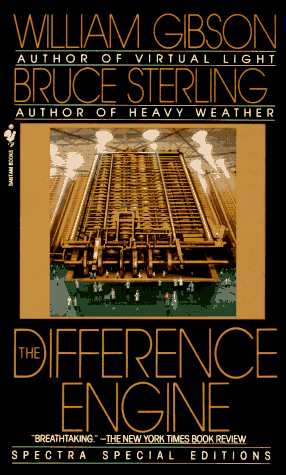
Despite it being coined before it’s publication, some say that the term “steampunk” wasn’t really in common usage until after 1990 when William Gibson and Bruce Sterling published The Difference Engine about a chase to find a special set of punch cards that, when fed to a steam-powered machine, produce an important and world-altering answer to an esoteric question, but it’s difficult to pinpoint it exactly. Notable authors in the past several years who are writing in the genre are people like Stephen Hunt and his Jackelian Series, Phillip Pullman and the His Dark Materials series, Gail Carriger’s Parasol Protectorate series, Scott Westerfield’s Leviathan YA series, Cherie Priest’s Clockwork Century Series, and many more.
Though it seems like Steampunk may be a very limiting sub-genre what with all its Victorian flair and lighter than air ships all over the place, it is inspiring the amount of creativity and diversity there exists in all of the books I’ve mentioned, and many more I didn’t. And on that note, I myself would like to finish Perdido Street Station by China Mielville. Some giant hypnotic soul-sucking moths just got loose in the city, and the deal with the Devil didn’t go down…
_____________________________
Sci Friday is a weekly post focusing on all things Sci Fi. Booksellers Tommy and Marie are you intrepid leaders on this journey through awesome new books; the best and worst of what’s come before; Sci Fi film adaptations and more. Check back next Friday for more!

 BookPeople
Perfect timing for the day I added some steampunk pictures to my blog!
Soy amante del cine y novelas de ficción y fantasía!!! ME ENCANTO! no tengo palabras! y muy cierto! ;D
This is so great! I’ve just started a paper at uni that’s about steampunk so thanks for helping me understand more of what it’s all about!
You’re welcome! There are lots of other great resources online as well. The best resources, of course, are the books and films themselves!
There are a lot of great steampunk books out there. You should really check out “His Black Wings” by Astrid Yrigollen. Its a really unique retelling of the classic Beauty and the Beast but is set in this amazing steampunk world.
I was recommended this website by my cousin. I am not sure whether this post is
written by him as nobody else know such detailed about my difficulty.
You’re amazing! Thanks!