
In the spirit of What We’re Reading This Week, we’re compiling Top 5 lists of the best books we’ve read this year. Old, new, fiction, nonfiction, everything is game. Here’s Sophia’s list:
 A Million Miles in a Thousand Years by Donald Miller
I read the majority of this book sitting out in the hot sun, for hours at a stretch with scant food or water, at this year’s ACL Fest. The fact that I was able to endure such conditions and still be engrossed in this book is a testament to how compelling it is. Donald Miller writes about working with two screenwriters to turn his life’s story into a movie. Along the way, he discovers that the elements of a good story are elements of a good life. Both involve “a character who wants something and overcomes conflict to get it.” This book helped me to re-conceptualize my own life’s story and create new and better ambitions for myself. Not only did I enjoy it, but it was a good conversation starter: at least two other festival-goers struck up a conversation with me about reading it.
 Born Standing Up by Steve Martin
A friend recommended this book to me—he was interested in the way that Martin created his fame by going on road tours that took him from an audience of no one to selling out arenas. I read it with piqued interest after seeing Martin perform with his bluegrass band on Austin City Limits. I realized, there has to be more to this guy than I’ve known. Sure enough, Martin’s memoir provided a nuanced look at his life. Far from being the self-assured trickster I’d always imagined, I found instead a good-hearted guy, who spent his formative years working at performing magic tricks, Knotts Berry farm, navigating a series of tender romances with fellow aspiring performers, and enduring a fraught relationship with his father. Interestingly, the memoir also locates the source of Martin’s comedy in his study of philosophy. Interested in defying logic, he attempted monologues of jokes with no punch line. It became his signature style.
 Mountains Beyond Mountains by Tracy Kidder
This book has had the circulation of a good indie rock album: quietly touted among small, knowing circles at its debut and steadily gaining recognition for its wide-reaching message and inspiration. I’m a little late to the game reading it; one customer spoke to me about reading it in 2002, right after she saw Paul Farmer speak at her college and before he became “famous.” What’s weird about Farmer’s fame is that he’s not a rock star, but instead a doctor who established a free hospital in Haiti, one of the world’s poorest countries. Through his efforts, he helped lower tuberculosis rates there, inspired others to repeat his example in other parts of the world, and built up Partners in Health, a nonprofit that supports his hospital (Zanmi Lasante) and other related public health projects. This book helps you realize that much is possible.
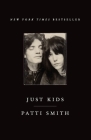 Just Kids by Patti Smith
Another gem to which I’m a latecomer. I admit that I’d never before listened to a Patti Smith album—though I now plan to—and read this book mainly because I had heard so much about it. I especially love the part where Patti moves to New York, because her reflections remind me of my own experience of Austin, having moved here from a smaller city: “This open atmosphere was something I had not experienced, simple freedom that did not seem to be oppressive to anyone.” I also identified with Patti’s bookishness, her intense bond with friend, lover, and muse Robert Mapplethorpe, and her primeval desire to express herself creatively. Plus, it’s beautifully written, in poetic prose, and offers insight into instrumental figures of the 1970s New York art scene.
 The Artist’s Way by Julia Cameron
Our entire creativity section is filled with Julia Cameron’s books. I’ve often thought it should just be renamed “Julia Cameron.” There’s a reason why Cameron holds a monopoly on books about the creative process. Since The Artist’s Way, her first and seminal work, she’s written a lot of books on the subject, but she’s also just super-good at helping you unleash your inner, “blocked” creativity. She offers concrete steps: I’ve personally gained a lot from doing “morning pages,” three pages of journaling that help you get out all your crappy, critical thoughts, which prevent you from producing good work. Some of her tougher requirements will have you responding like a petulant child to a stern disciplinarian—She wants me to stop reading? Like, stop reading?!—but ultimately you realize she’s right and her methods work.
Tracey Kidder,

 BookPeople
The Steve Martin book looks great! I’ll have to pick that up. Thanks for sharing =D