by Ethan S.
Disclaimer: Check Trigger Warnings (TWs) on all books before reading.
One thing I love about the wintertime is having lots of time to reflect, scrolling my Goodreads, about all the new and exciting books and authors I read this year. I especially love deep-diving into the book and what the author intends, truly understanding and appreciating the decisions the author chose in the piece. I find myself watching interviews of the author to look at those Easter eggs that advance the plot and my takeaways.
When I think of classics, I don’t just think of books that are old. I think of books that are read to be a marker of the time period, influenced by the world around them and subsequently influencing readers of the future. I think of books with a lasting message today and significance in our world. I think of books that I could re-read constantly and look at my life differently each time. As society changes and evolves, the messages conveyed in writing do too. Books that stick with me and address topics that give me a insight into the world around me, even as it changes, are incredible examples of the power of writing.
With that said, over the year, five books stood out to me, beckoning me to return to their worlds. These books made me look at the world with a new perspective, and centuries in the future I hope this perspective lasts.
Lessons by Ian McEwan (2022)
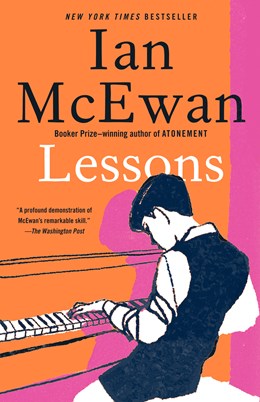
Synopsis: McEwan weaves a detailed story about or protagonist, Roland Baines, following his life after his wife leaves him to pursue a writing career, abandoning him and his infant son. Throughout the story, Baines’ memories are dispersed through chunks and internal with the present timeline. On a broader scale, we follow our protagonist from World War II up to the COVID-19 pandemic.
While at first confusing, the non-linear timeline allows the reader to get a glimpse of memories in our protagonist’s past, and how they mirror his present situations. Starting with the situation with his wife, then jumping to days at his boarding school with his piano teacher, then jumping back and forth between present and a hodge podge of past timelines, the book is genius in it’s unique pacing and structure.
This lengthy novel leaves no stones unturned, urging the reader to find lessons in everything we do. This book has stuck with me throughout the year, shaping how I view the world around me. It makes me consider the effects of our past and how it can influence our present and future. While by no means are these events in this book reflective of McEwan’s life, it has been noted as his most autobiographical work as the time periods discussed have all taken place while McEwan has been alive. This book makes me look at the legacy I have, and as we follow Roland, I further appreciate the minutiae of life.
Fourteen Days Edited by Margaret Atwood and Douglas Preston (2024) and Written by contributions from the Writer’s Guild
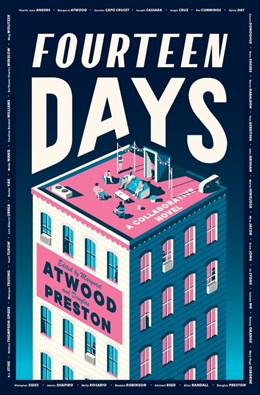
Synopsis: In March 2020, the pandemic shuts down the world. For a rundown building in lower Manhattan, an escape from the monotony of the day is found on the roof. As the novel unfolds, there is a progression to how these neighbors, previously strangers, open up about their stories and share their lives with each other, bonding in their quarantine bubble, highlighting that despite the separation of the time, it is still human nature to connect.
While the writing for this books is phenomenal and the plot is creative and exciting to read, what really stands out to me in my mind is the thirty-six writers involved in the project. It really showcases collaboration in a time where separation was familiar and encouraged. The incorporation of different voices to emphasize the uniqueness of each character is brilllaint. The works artists create in the pandemic can often be looked back on as celebrating juxtaposing our present situation and time with feelings of resilience and togetherness. This novel is a perfect example of just that. Classics are often looked back on with how they use their time period and shape it, and this one will no doubt be looked at as an incredible feat.
List of Writers: Charlie Jane Anders, Margaret Atwood, Jennine Cap(o) Crucet, Joseph Cassara, Angie Cruz, Pat Cummings, Sylvia Day, Emma Donoghue, Dave Eggers, Diana Gabaldon, Tess Gerritsen, John Grisham, Maria Hinojosa, Mira Jacob, Erica Jong, CJ Lyons, Celeste Ng, Tommy Orange, Mary Pope Osborne, Douglas Preston, Alice Randall, Ishmael Reed, Roxana Robinson, Nelly Rosario, James Shapiro, Hampton Sides, R. L. Stine, Nafissa Thompson-Spires, Monique Truong, Scott Turow, Luis Alberto Urrea, Rachel Vail, Weike Wang, Caroline Randal Williams, De’Shawn Charles Winslow, Meg Wolitzer.
Time Shelter by Georgi Gospodinov (translated from the original Bulgarian by Angela Rodel) (2022)
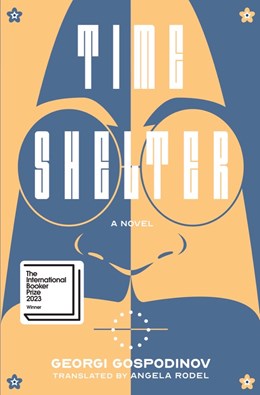
Synopsis: For patients struggling with Alzheimer’s, a psychiatrist named Gaustine designs a building where each floor represents a different decade, helping these patients synchronize their rewinding memory with their environment. However, soon those who are healthy come crawling in order to rewind to the past. It spreads from Zurich to a worldwide phenomenon. As more and more turn to nostalgia, the past soon begins to invade the present. Our unarmed narrator works with Gaustine, allowing us to insert ourselves into the story and really be immersed the situation.
The book allows us to reflect as a society on how our memories and nostalgia drive us as people. It provides not only ways in which memory can comfort those, to the point where we sacrifice our present to stay in the past, in the comfort. Winner of the International Booker Prize in 2023, Gospodinov presents us with this utterly real and fresh novel about how time influences many aspects of our society, whether driving us forward or pushing us back. It plays out a world where time can be used as this protective force, this… shelter, making the reader debate how memories play a role in their life. This reflection the book poses it what hallmarks it as a future modern classic.
The Book Censor’s Library by Bothayna Al-Essa (translated from the original Arabic by Ranya Abdelrahman and Sawad Hussain) (Published in the original in 2023, translated in 2024)
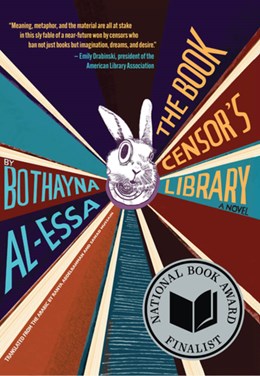
Synopsis: In a dystopian world, our protagonist gets hired as a censor where he spends his days reading books and writing down lines that go against The Manual for Correct Reading. The society, referred to as the System, believes that if imagination and interpretation are eliminated, society would be much better. In this way, books are to be banned along with most television programs. As a new censor, our unnamed narrator starts with nonfiction but years or novels. After he reads Zorba the Greek, he starts to “swim” in interpretations and is cut off from fiction. Then, he secretly takes banned books along with the Secretary, he joins the Cancers and dives into the world of “rescuing” these banned books.
The book expertly draws on classics such as Bradubury’s Fahrenheit 451, Kazantzakis’ Zorba the Greek, Carroll’s Alice in Wonderland, and masterfully mirrors aspects of Orwell’s 1984. The commentary on book censorship is expertly weaved into a narrative of resistance. The subtle nods to other great literary works add to the metaphors of the book. Humorous at times, the book reflects on how literature as a whole is tied intrinsically with humans individualism and imagination. Starting with the oxymoron on the front cover (a Book Censor, would have a library?), this book is genius in it’s pure form. It forces the reader to question what it means to interpret and how to limit that seemingly basic thought can turn our world into something unrecognizable and distant-seeming. The dystopian aspects of it ted with the many metaphors really spotlight censorship in today’s times.
Animalia by Jean-Baptiste Del Amo (translated from the original French by Frank Wynne) (Published in the original French in 2016, translated in 2019)

Synopsis: Animalia is a detailed and complex family saga following four generations of a modest family in the French village of Puy-Laroque spanning the twentieth century. World War 1 brings liberation for our protagonist (E)l(e)onore from older restrictions starting a central theme of modernization present throughout the novel. We see this small town turn from an untamed world into something unrecognizable. The family now churns through thousands of pigs on the now industrialized farm, as the cycle of each pig’s birth, growth, and death are used literally and as metaphors for our humanity and our evolving relationship with the world.
While at times disgustingly literal, the lyrical prose and figurative language in this book adds to the world building and characters emphasized. Our relationship, as a species, with animals and nature is complex. The book introduces an important theme of modernization especially through industrialization to show how over just the twentieth century, farm life advanced. The practices Del Amo vividly describes always allude to a cycle. In this way, Del Amo uses much of his novel as a metaphor for our lives, and the cyclical nature found in our lives. He combines nature with human reflection in this stunning masterpiece of fiction.

 BookPeople
What kind of trigger warnings are we talking about? Are they different for all the books?